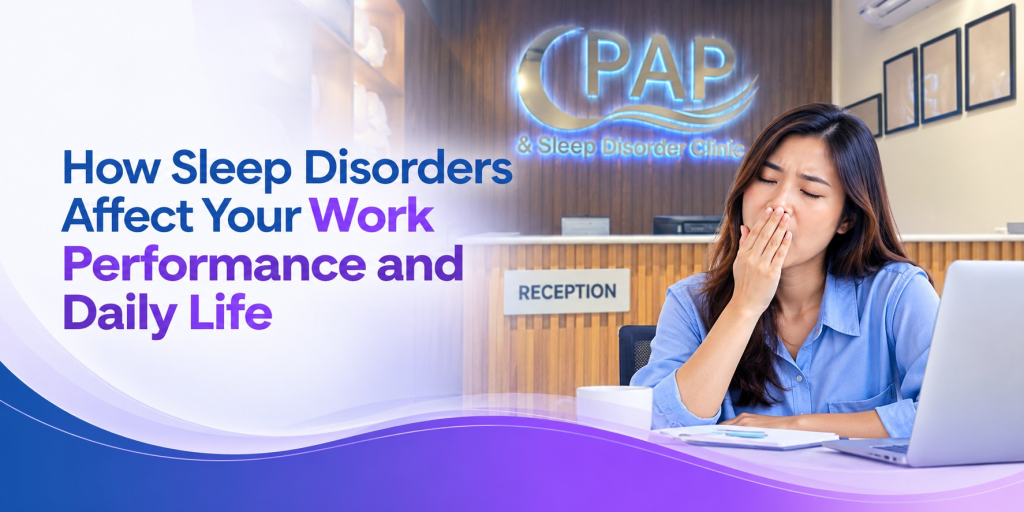
How Sleep Disorders Affect Your Work Performance and Daily Life
You set your alarm, get your recommended hours of sleep, and still wake up feeling exhausted. You struggle to focus
CPAP and Sleep Disorder Clinic PH

You set your alarm, get your recommended hours of sleep, and still wake up feeling exhausted. You struggle to focus

Sleep is not a luxury — it is a necessity. And for three remarkable days in Davao City, the country’s

Snoring is a common sleep issue that can disrupt rest and strain relationships, often caused by blocked or narrowed airways during sleep. Factors such as sleeping position, dehydration, nasal congestion, alcohol use, and poor sleep habits can increase the likelihood of snoring. Simple adjustments like sleeping on your side, elevating your head, staying well hydrated, and using nasal aids may help improve airflow and reduce nighttime noise. While occasional snoring is usually harmless, persistent snoring may signal an underlying sleep disorder that affects overall sleep quality and daily well-being.

Sleep disorders often develop quietly, but their effects on mental health can be profound and long lasting. Poor sleep disrupts the brain’s ability to regulate mood, manage stress, and process emotions, increasing the risk of anxiety, depression, and cognitive decline. Over time, chronic sleep deprivation can impair memory, focus, and decision making, affecting daily functioning and overall quality of life. Many people overlook the connection between sleep and mental well-being, attributing symptoms to stress or aging. Understanding how sleep disorders influence mental health is an important step toward recognizing their impact and addressing the root causes early.

Joshua Mari Descalso | March 6, 2025 Sleep is a fundamental component of our overall health, yet it is often