
You set your alarm, get your recommended hours of sleep, and still wake up feeling exhausted. You struggle to focus during meetings, forget things you just heard, and find yourself irritable by mid-afternoon. Sound familiar?
For millions of Filipinos, this is not just a bad night — it is a nightly pattern driven by an undiagnosed sleep disorder.
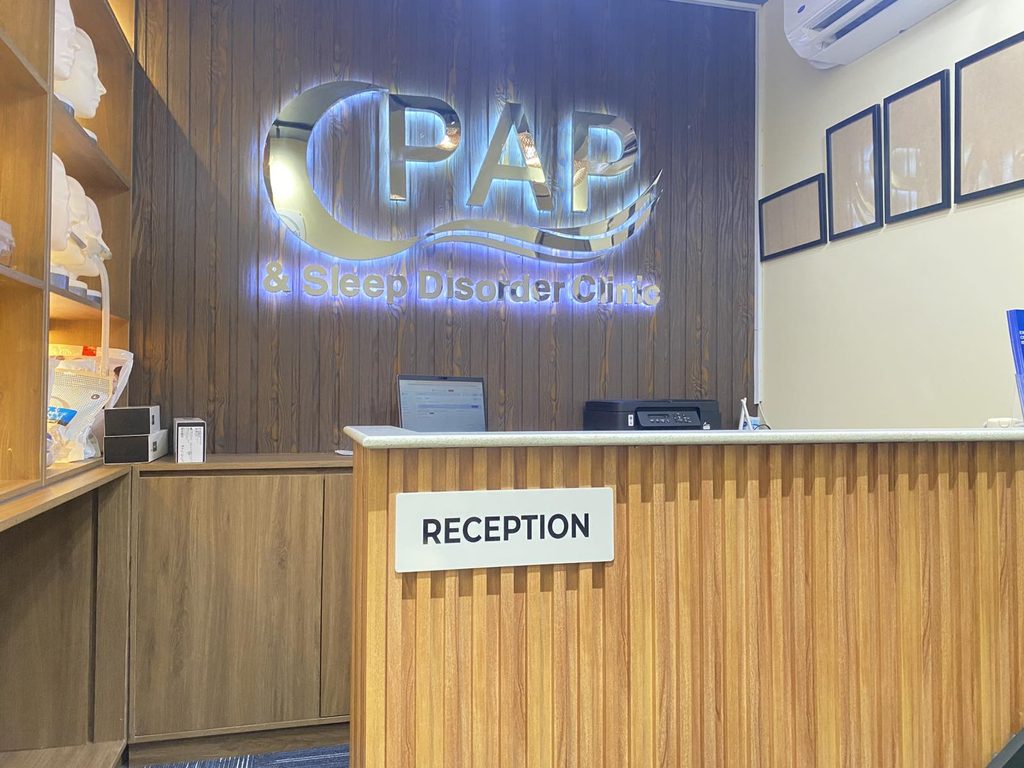
At CPAP and Sleep Disorder Clinic, we see firsthand how sleep disorders like sleep apnea and insomnia silently affect the lives of patients — not just at night, but throughout every waking hour. Here is what you need to know.
The Most Common Sleep Disorders That Affect Daily Life
According to our clinical team, the two most common sleep disorders seen in patients that significantly impact daily functioning are:
- Obstructive Sleep Apnea (OSA) — a condition where breathing repeatedly stops and starts during sleep, preventing the body from getting the restorative rest it needs
- Insomnia — difficulty falling asleep, staying asleep, or waking up too early, leading to chronic sleep deprivation
Both conditions can have serious consequences if left untreated — and the effects go far beyond simply feeling tired.
How Untreated Sleep Apnea Affects Your Daily Life
Sleep apnea does not just disrupt your sleep — it disrupts your entire life. As our clinical team shares:
“It affects the daily life of patients and also worsens their medical conditions, especially affecting heart and lung conditions.”
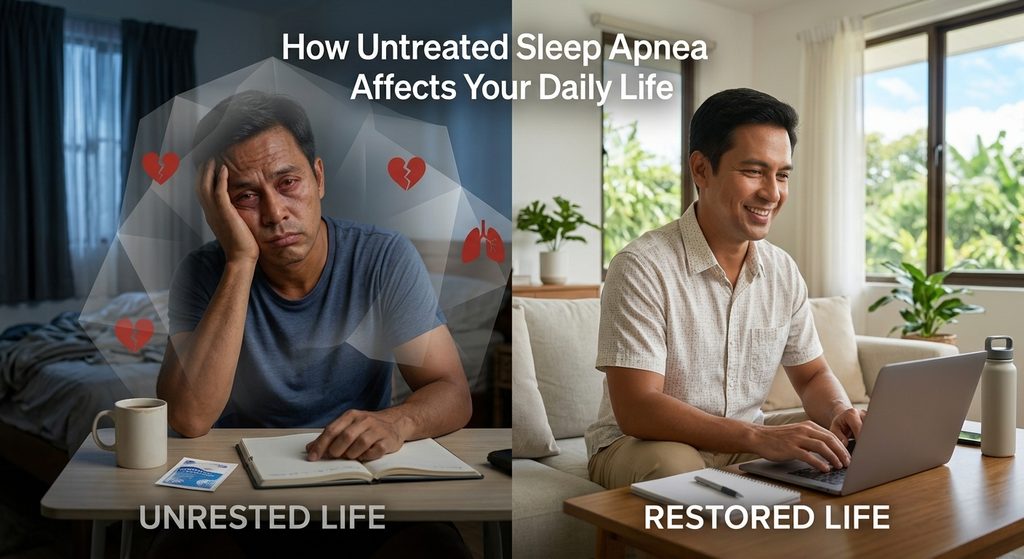
When your breathing is interrupted dozens or even hundreds of times each night, your body never fully enters the deep, restorative stages of sleep. The result is a cascade of effects that touch every aspect of your waking life.
The Impact on Work Performance
Difficulty Focusing and Staying Alert
Poor sleep directly impairs the brain’s ability to concentrate, retain information, and make sound decisions. Our clinical team observes this regularly:
“Usually patients cannot focus well on their work and might experience daytime sleepiness as well.”
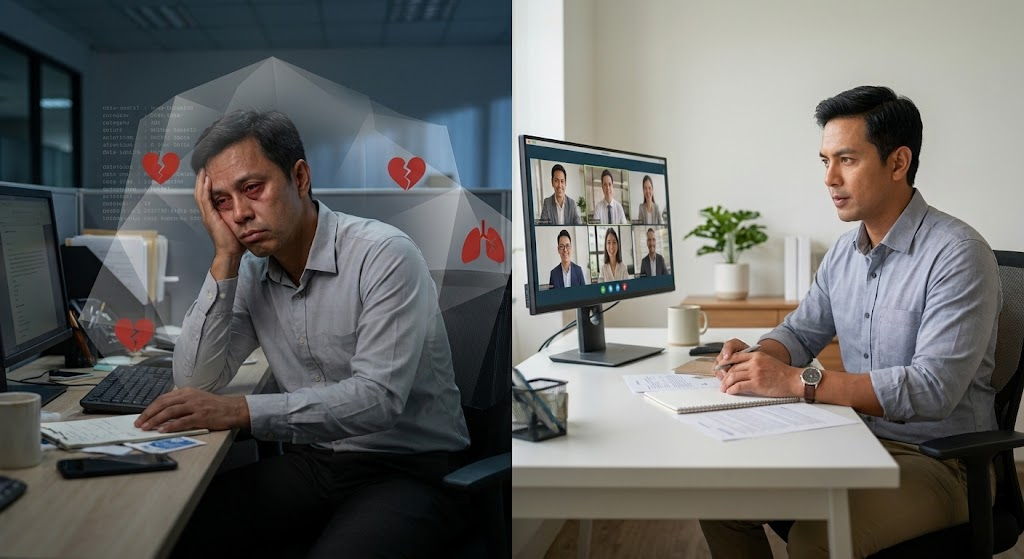
For professionals who need to be sharp, creative, and decisive — this is a serious problem. Whether you are writing reports, managing a team, or operating machinery, impaired cognitive function puts both your performance and safety at risk.
The Good News: CPAP Therapy Works
The encouraging reality is that treating sleep apnea can dramatically improve work performance. Our team has seen it time and again:
“Definitely yes — and I can say 80% of patients give us feedback that they can function well, feel less irritable, and are more focus-centered after starting CPAP therapy.”
Eight out of ten patients report meaningful improvements in their daily functioning. That is not a small number — that is a life-changing transformation.
Who is Most at Risk?
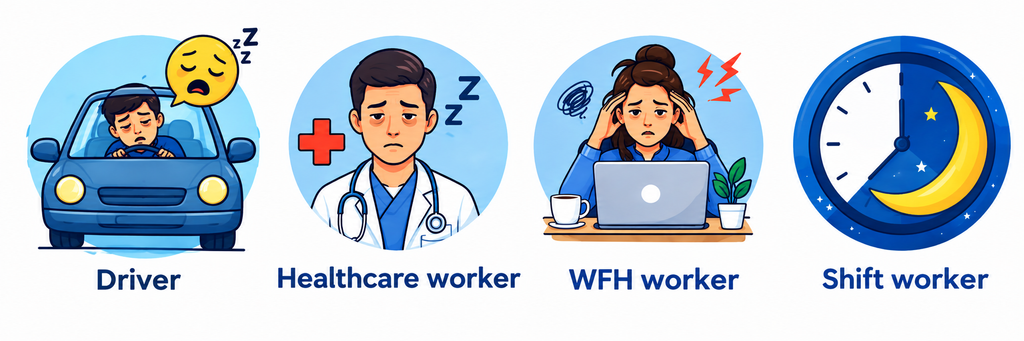
While sleep disorders can affect anyone, certain professions face a higher risk — either because of their work schedules or the nature of their jobs:
- Drivers — drowsy driving is as dangerous as drunk driving, and undiagnosed sleep apnea significantly increases the risk of road accidents
- Healthcare workers — long shifts and high-pressure environments make quality sleep even more critical
- Work-from-home (WFH) professionals — irregular schedules and sedentary lifestyles increase the risk of undiagnosed sleep disorders
- Shift workers — those who work nights or rotating schedules are especially vulnerable to sleep disruption and its consequences
As our clinical team notes: “Shift workers, WFH workers, and drivers are among those most at risk — and many remain undiagnosed.”
The Impact on Relationships
Sleep disorders do not just affect the person who has them — they affect everyone around them.
One of the most telling signs of sleep apnea at home? What our clinical team calls the “elbow kick” phenomenon:
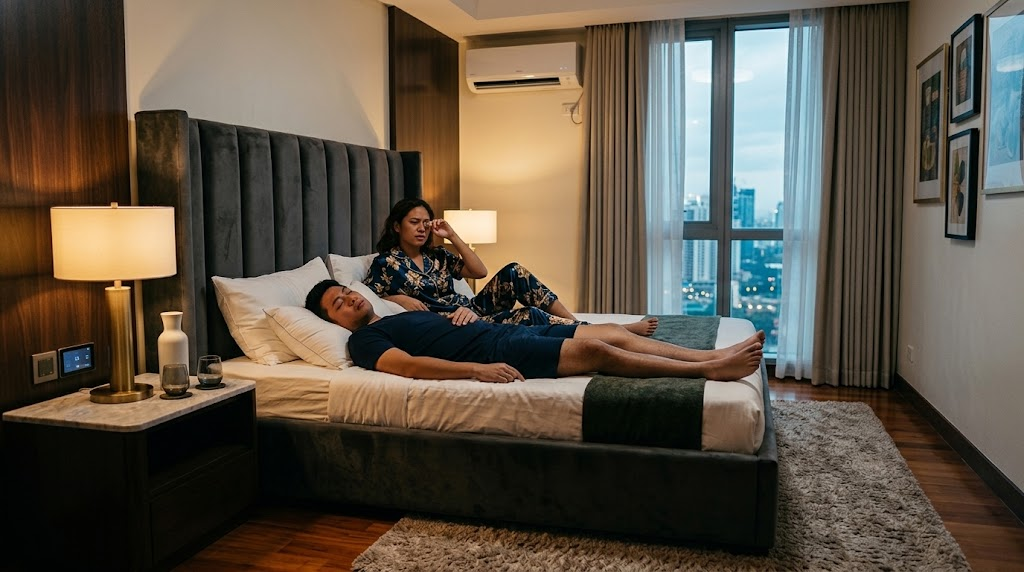
“‘Elbow kicking’ is the common sign which bed partners do when their partner is having a sleep apnea episode. It is one of the reasons for sleep-related relationship strain — bed partners are left without enough rest and are sometimes forced to sleep in separate rooms.”
Chronic sleep deprivation and the disruption it causes to shared sleep can strain even the strongest relationships — with partners, family members, and friends. Irritability, mood swings, and emotional withdrawal are common side effects of untreated sleep disorders that ripple outward into every relationship.
The Emotional and Mental Health Effects
The connection between sleep and mental health is well established — and our clinical team sees the consequences every day:
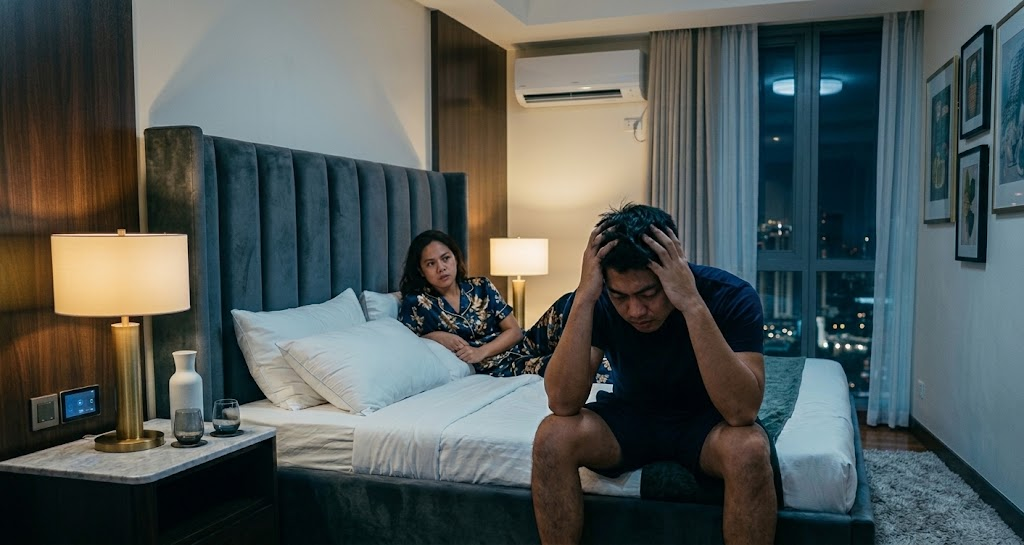
“Untreated sleep disorders can cause more complications in health. The risk of hypertension, stroke, and diabetes are all significantly elevated.”
Beyond physical health, chronic poor sleep also takes a serious toll on emotional well-being — contributing to anxiety, depression, mood instability, and a reduced ability to cope with everyday stress.
Long-Term Physical Health Consequences
The effects of untreated sleep disorders extend well beyond feeling groggy in the morning. Over time, sleep deprivation and untreated sleep apnea weaken the body in ways that compound over years:
“Individuals who lack sleep tend not to function well during the day and can weaken their immune system.”
Long-term consequences of untreated sleep disorders include increased risk of:
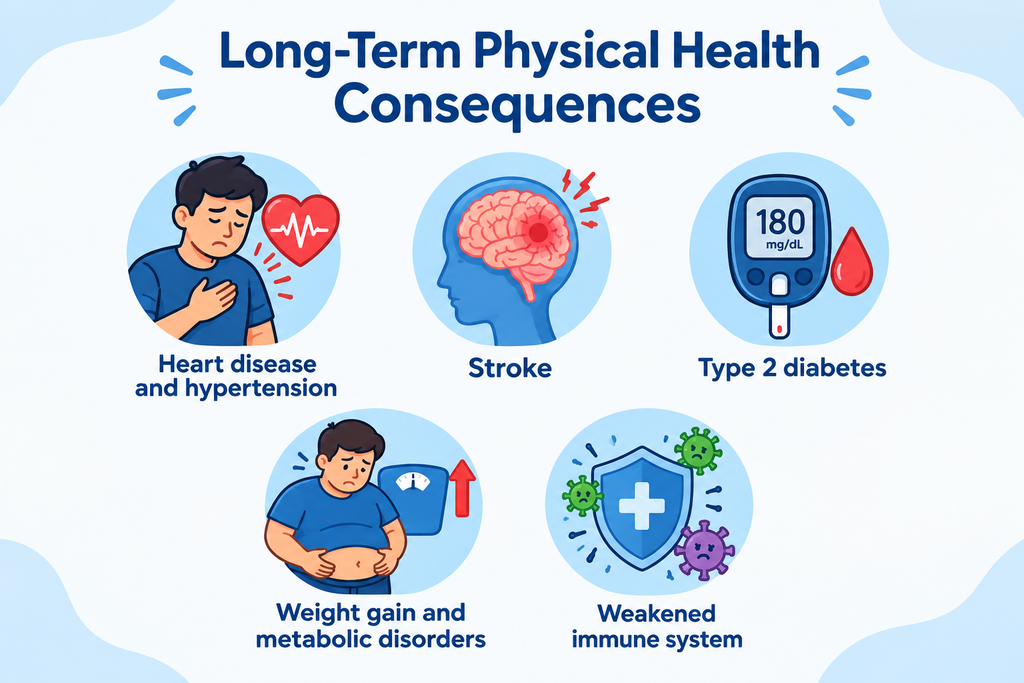
- Heart disease and hypertension
- Stroke
- Type 2 diabetes
- Weight gain and metabolic disorders
- Weakened immune system
When Should You Seek Help?
If you recognize any of these signs in yourself or someone you love, do not wait:
“If someone has symptoms but is unsure, it is better to have it assessed right away.”
The first steps are simple:
- Initial assessment and consultation with a sleep health professional
- Sleep study — either a Level 1 PSG or a Level 3 Home Sleep Apnea Test — to confirm a diagnosis
- Treatment — if sleep apnea is confirmed, CPAP therapy is the most effective and widely used treatment
A Message to Working Professionals
If you have been pushing through exhaustion, dismissing your symptoms, or telling yourself you will deal with it later — our clinical team has a message for you:
“Sleep is essential — not just to sustain your energy for the whole day at work, but keep in mind that it is just as important as eating your daily meals. It is where we regenerate ourselves and fuel our minds.”
Your body cannot perform at its best without proper sleep. Your career, your relationships, and your health all depend on it.
Take the First Step Today
If you suspect you or a loved one may have a sleep disorder, CPAP and Sleep Disorder Clinic is here to help. From initial consultation to diagnosis to treatment — our team of licensed respiratory therapists and sleep physicians will guide you every step of the way.
BGC Clinic: Unit 409 Lane T, Avida Cityflex SOHO Tower, 34th Street, Bonifacio Global City, Taguig City
Call/Text: 0967-462-6521 | 0956-450-8100
Email: info@cpapsleepclinic.ph
Sleep Quiz: www.cpapsleepclinic.ph/sleep-quiz/
Because better sleep is not a luxury — it is a necessity.